Your baby’s development: 2 months old and already reacting to the world around them
All babies develop at different rates. You shouldn’t be too concerned if your baby does something later or earlier than other children. If you do have any concerns, talk to your pediatrician.
By the end of your baby's second month, they will likely be able to do the following:
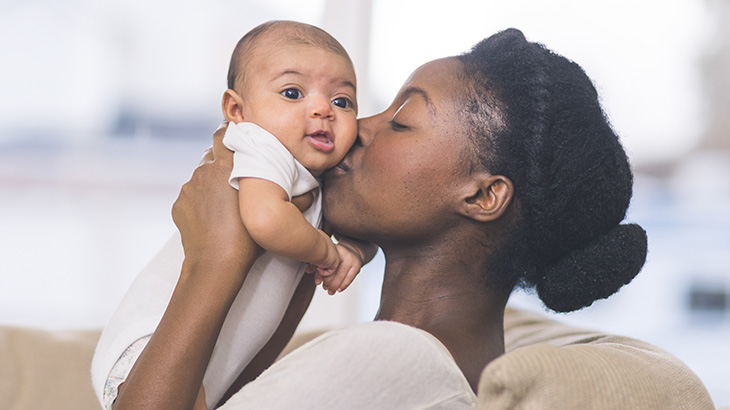
- Smile when you touch or talk to them
- React to loud sounds by startling, crying, or getting very quiet
- No longer keep their hands in tight fists
- Begin recognizing you
- Begin to push up with their forearms while lying on their stomach
At this age, it’s all about your baby’s body language
Your baby cannot speak yet, but their body is speaking to you loud and clear, if you know what to look for.
Seeking ways to adapt to the world. Sleeping is an example of one way your baby is learning to organize their life. When they’re tired, “turning off their world” is a way to conserve energy for growth.
Giving you permission and feedback. Watch closely, and your baby will show you through their body language how much or how little stimulation they can handle. When they are ready for talking, feeding, singing, or playing, their reactions will say so—or they will tell you they’ve had enough for now.
Some tips and things to know about your baby’s sleep patterns
Some things to know about your baby’s sleep patterns and tips for smoothing them out:
- Your baby will probably sleep for shorter periods during the day and longer stretches at night.
- To help them get used to falling back to sleep on their own, gently place them down in the crib while they're groggy but still awake.
- Keep your rooms and interaction bright and lively during the day.
- Keep rooms and interaction dim and calm in the evening.
To learn about infant sleep safety, or if you have questions about SIDS, read more from the American Academy of Pediatrics.
Next month’s developments: they hold their head up and hold other things, too!
By month 3, your baby can grasp a toy with their hands and grab your attention with new sounds. Read ahead to learn more about what you can look forward to in Month 3.