Text Size Small Text Size Medium Text Size Large TEXT SIZE

Tips & Advice on Baby Care for Your Baby at 7 Months Old

Month 7 Turn Me Loose
Hate it!
Dislike it!
Meh...
Like it!
Love it!

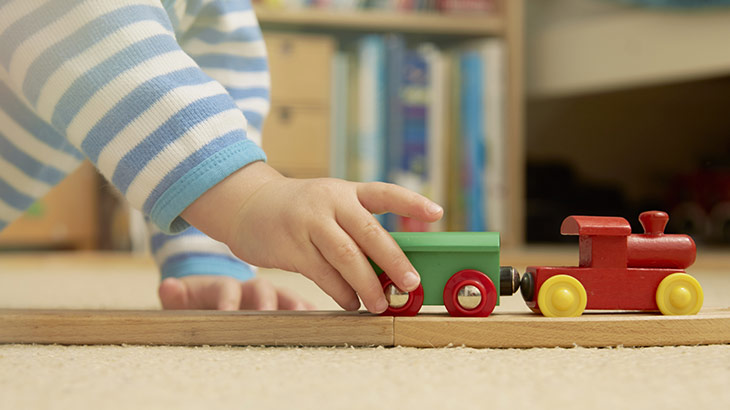
During month seven, your baby starts moving more independently, scooting around on his belly like a tadpole. At the end of this month, your baby will probably be getting his first tooth, and even, perhaps, eating his first cracker. How can you help his development this month? Read children's books, or make your own with bright pictures from magazines. Point to and name objects and people as he looks at them. Also this month, find out how to:

Also learn about:

Helping Your 7-Month-Old Develop a Strong Mind and Body

This month, your baby's language, recognition, and social skills are at an important stage of development. Help ensure his development stays on track by continuing to engage him in some of these activities:

  • Chat with your baby every time you're together.
  • Expose him to a variety of sounds, and help him try to locate them.
  • Imitate the sounds your baby makes, and try to get him to make those sounds back to you.
  • Provide some quiet time when the radio and TV are not on.

You can also make a photo album of familiar family members, and point to and name objects and people so your baby absorbs new words. He may stay interested only a few minutes at a time, but try to do this every day.

Once your baby can sit on his own in a high chair, mealtime becomes a party. Back to Top >

Baby Eat, Baby Play

Once your baby can sit on his own in a high chair, mealtime becomes a party. He wants to grab the spoon, put it in his mouth, and bang it on the tray, creating his own special baby song.

Eating comes with other surprises as well. Some time soon, he may be ready to eat a cracker or dry cereal by himself. Not only does this introduce him to "grown-up" food, but it also lets him practice his fine-motor skills.

And remember, while it's difficult to never leave the room while your baby eats, it's important to stay with him to prevent choking or tumbles from the high chair.

Baby Walker Safety Issues

It's safer and more developmentally sound for your baby to learn to walk on his own than to use a walker. In fact, the American Academy of Pediatrics strongly urges parents not to use baby walkers for these reasons:

  • Walkers can lead to high-speed, dangerous falls, because they allow your baby to travel to unsafe places that he wouldn't be able to reach on his own.
  • They slow down your baby's progress when he's learning to walk.
  • They may also decrease your baby's desire to walk on his own.

It's also more developmentally sound to let your baby progress from crawling, to standing, to cruising, to walking at his own pace.

Back to Top >

Visits With Baby's Health Care Professional

Your baby's out and about more this month. And as your baby plays more with other babies and children, he's more likely to pick up colds and viruses. While every baby gets these illnesses, talk with your baby's health care professional if you notice any of the following symptoms:

  • Runny nose or congestion that interferes with eating or sleeping or lasts longer than a week to 10 days
  • Cough that is associated with vomiting or that interferes with sleep
  • Wheezing
  • Unusual fatigue and crankiness
  • Diarrhea or vomiting
  • Decreased appetite
  • Fever
  • Pulling at his ears

Regular “well-baby appointments” during this time will also put your mind at ease, reassuring you that your baby is reaching developmental milestones and getting the recommended vaccinations that protect him from serious childhood illnesses. Ask your health care professional for an immunization record, so that you can keep it for the lifetime of your child.

As your baby enters his seventh month of life, his language, recognition, and social skills are at an important stage of development.

Back to Top >

It's Teething Time — What Should You Expect?

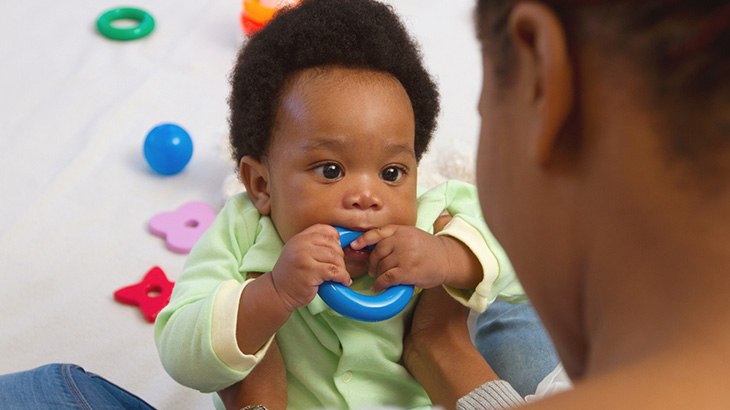
Your baby's first tooth can arrive as early as 3 months or as late as 12, but the average age for babies to begin teething is 7 months. How will you know? Watch for him to start drooling more heavily and biting on his hands. He may also develop a rash on his chin from saliva, and may get irritable from the discomfort and inflammation of his gums. It can also keep him up at night.

You could try giving him a frozen teething ring or other teething toy, or even a frozen wet washcloth to chew on to help relieve the discomfort. You may also want to replenish your stock of bibs, and try to keep cloth diapers close by to help keep his clothes and face dry.

Back to Top >
MOM AND BABY: MONTH-BY-MONTH GUIDE
Baby Development at 1 Month Pregnant Baby Development at 2 Months Pregnant Baby Development at 3 Months Pregnant Baby Development at 4 Months Pregnant Baby Development at 5 Months Pregnant Baby Development at 6 Months Pregnant Baby Development at 7 Months Pregnant Baby Development at 8 Months Pregnant Baby Development at 9 Months Pregnant Baby Development at 10 Months Pregnant Baby Development at 11 Months Pregnant Baby Development at 12 Months Pregnant
Strong Moms Strong Connections
Just wanted to see if there were anyother moms due in Feb.
Februrary moms???
Latest post by kbertschi 20, 
9/9/2010 10:08:01 AM
Well many of you know about the miscarriage situation and negative HPTs i've been going through....
Starting Over....
Latest post by hiswifey1981 6, 
9/9/2010 9:29:27 AM
Join the Conversation >
Sign Up for Pampers® and Earn Gifts to Grow® Points!
Pampers diapers
When you register with Pampers, you’ll get in on the Gifts to Grow rewards program. Earn points when you purchase Pampers products, and redeem them for fabulous rewards. Plus, new members get free Gifts to Grow points!