The Third Trimester Pregnancy Weeks—You’re in the Home Stretch!

Pregnancy Weeks 28-30: Your Little One Is Getting Not-So-Little
You’re more than halfway through your pregnancy, and it’s time to start thinking about labor and delivery. How exciting! Your body will be going through some changes as it prepares for labor, and you’ll need to start planning to meet your little one!
We recognize that every fertility and pregnancy journey is unique. This guide offers a general overview of what a routine term pregnancy might look like and may not reflect the full range of individual experiences. It is not intended to serve as medical advice. Always consult with your healthcare provider regarding your pregnancy and reach out to them with any specific concerns.
Baby Is Filling Out…FAST
By now, your baby is much closer to their birth length than they are to their birth weight. While your baby could be within just a few inches of their birth length, they may still double or triple in weight! All that growth means you’ll need to keep up with them by staying on track with a healthy diet. During the third trimester, your baby’s brain develops connections associated with metabolic processes. That means eating healthy now could reduce your child’s risk for childhood obesity as they go through this period of increased growth. As always, consult your physician before making any changes to your diet or nutrition.
Appetite During Pregnancy – Always Hungry or Not Hungry in Third Trimester?
As your baby experiences a period of rapid growth, you may feel hungry more often. But you may also get satisfied and full from less food than normal. This is because as your baby grows, they are taking up more space and leaving less room for your stomach. So, despite being hungry more often, you may actually be eating less food. It might be a good idea to eat several times during the day, but smaller, nutrient-dense meals. As always, consult your physician before making changes to your diet.
Your Final Monthly Doctor Visit
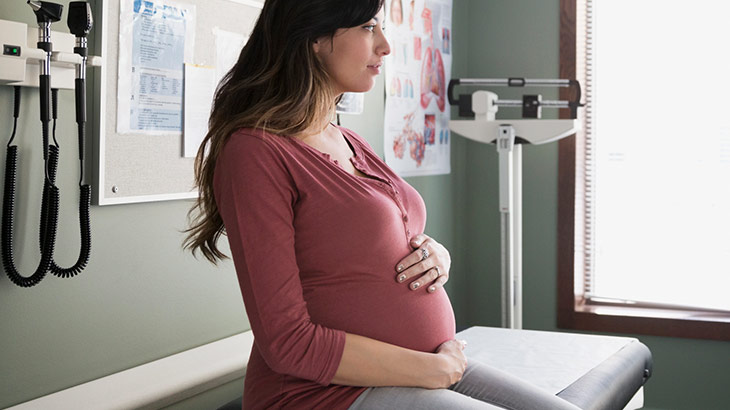
Around week 29, you’ll go to your final monthly doctor visit. After that, you may go every 2 weeks or every week until the baby arrives. Your health practitioner will measure things like your blood pressure, weight, and your baby’s heart rate and size. Make sure you’re communicating openly and clearly with your doctor. Let them know how you’re feeling both physically and emotionally.
Notice Anything Different? Stretch Marks, Varicose Veins, and Numbness
As your body prepares for labor, you may notice some changes to your body that you don’t exactly love. Don’t worry, it’s completely normal. Everyone is different and will have a different experience with these events. Here’s what you need to know:
- Pregnancy stretch marks: The appearance of stretch marks does not mean that you’re gaining too much weight. About 90% of women get them. Their prominence and duration are largely hereditary.
- Varicose veins during pregnancy: Veins that bulge or turn blue is a common condition called varicose veins. Your veins are becoming larger to accommodate increased blood flow. Though itchy or irritating, they are usually harmless.
- Numbness and tingling in pregnancy: It’s possible that your growing uterus might press on nerves connected to your legs and arms. This can cause your legs, toes, or arms to tingle. This is often completely normal, and it will disappear after your baby’s birth.
Always discuss your pregnancy symptoms with your doctor. Your doctor can assess if your symptoms are abnormal.
Pregnancy Week 32: Signs and Symptoms of Some Major Changes for You and Baby
There’s a lot happening during this week. You may notice some changes in baby’s movement habits and some more changes to your body. It’s all a part of the journey. And sometimes knowing what to expect can make it easier to go through some of these transitions.
Baby Position – Your Infant Is Getting Their Body Ready, Too
Around week 32, many babies begin to move into a head-down position in your pelvis to prepare to make their exit during birth. As your baby shifts around, the normal kicks and punches you’re used to feeling may change to squirms and wiggles. Don’t worry, it’s completely normal. There’s not a lot of room down there, and your little one is on a mission to move south!
Shoes Not Fitting the Same? Could Be Swollen Feet & Ankles
While your body continues to stock up on blood and other fluids, your growing uterus may be slowing down your blood flow. This can all lead to swollen feet. It’s very common and not dangerous. Here are a few ways to manage the symptoms:
- Don’t sit or stand for long periods. Take breaks often and take a brisk, brief walk to keep circulation and fluids moving.
- Elevate your legs when possible. Sleep with your feet propped on a pillow to keep fluids from pooling in your lower body.
- Lie on your side. Keep one or both knees bent. Use extra pillows for support.
- Maintain regular exercise, but be sure to check with your doctor before trying any new exercises.
Pregnancy Weeks 33-34: Give Extra Attention to Labor Planning
It’s time to start prepping for the big day! You’ll need to start imagining how your day of labor will go and do as much planning as possible—and that also means taking care of yourself over these next few weeks.
Get to Know the Hospital and Facilities
You’ll have plenty to worry about the day you’re delivering your new arrival. The last thing you’ll want to deal with is paperwork or being lost in the parking garage. Many hospitals and birthing centers will allow you to preregister around this time. If you haven’t already, you may want to tour the facility and see a labor and delivery room. Even knowing where your partner is going to park can take some stress and unknown out of the day. If you feel like you’re overplanning, you’re doing it right!
Getting Comfy While Sleeping
Baby has been growing at a very fast rate and is moving all around. All that growth and movement is great for your baby but can make it hard to find a comfortable sleeping position, as different organs get smooshed around. Here’s a position you can try that many women find useful:
- Lie on your left side with your legs and knees bent. This position helps take the pressure off the primary veins in your legs and your lower back. If you need to adjust your position overnight, try the same technique on your right side.

Pregnant Moms Should Drink More Fluids
Water is critical in a healthy pregnancy. Water helps form both the placenta and amniotic fluid that your baby is relying on. And because you have increased nutrition needs and fluid requirements during pregnancy, you need to drink more water than the average person. Make sure you are getting ten 8-fluid-ounce glasses of water a day. Drink more if you are exercising. You can count other fluids, such as 100% fruit juices, vegetable juices, soup, and milk, but you still want to try to keep regular water as your primary source of fluid. To replenish fluids and electrolytes, you can try Pedialyte® for rehydration. If you’re feeling dehydrated or have concerns about fluids, contact your physician.
Pregnancy Weeks 35-36: Dress Rehearsal for You and Baby
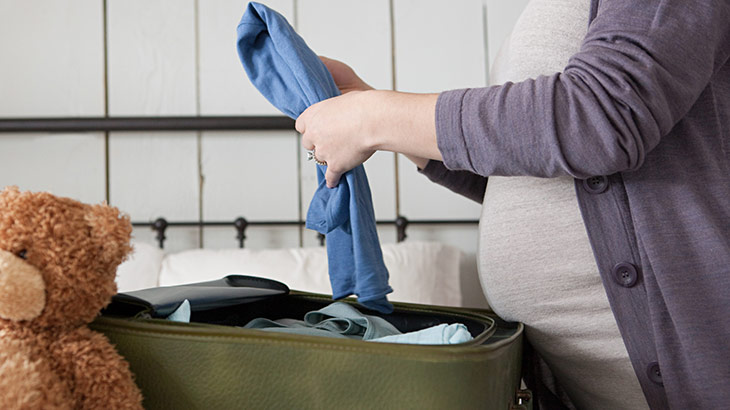
While you think about things like what to pack for the hospital, your baby is also preparing to make their long-awaited debut! Everything from baby’s position to your diet will have an impact on your experience. You’ll also be seeing your doctor every week or two from now until baby arrives.
How Baby’s Position Affects Labor
Your baby’s placement in your uterus can vary greatly—whether they are facing right or left and are head-first or feet-first. Throughout early and mid-pregnancy, your baby floats in your uterus and changes positions often. But, by now, your baby has hopefully rotated to a head-down position for labor and delivery.
If your baby is breech (when they are positioned feet- or bottom-first in the uterus) but is not too far down into your pelvis, your doctor might try to turn them into the proper position a few weeks before your due date. If they can’t be turned, your doctor may require a cesarean section delivery.
Feeding Baby’s Final Growth Spurt
The next 3 weeks could bring your baby's most rapid weight gain yet—about ½ pound a week! To support all that growth, you’ll want to make sure you’re eating a nutrient-rich, balanced diet. You can also check out our healthy snack guide for ideas on how to eat healthy during pregnancy without spending too much time in the kitchen. You should be resting instead of on your feet cooking!
Braxton Hicks vs Real Contractions
Braxton Hicks contractions (also called false labor contractions) are a tightening of the uterus muscles that can last anywhere from 30 seconds to 2 minutes. Many women confuse them with true labor contractions, which can be concerning if a woman experiences them in the second trimester or early in the third trimester. It’s believed that Braxton Hicks contractions are preparing your body for real labor contractions, but it’s important to know the difference.
Braxton Hicks vs true labor contraction
Braxton Hicks (False Labor) Contractions | True Labor Contractions |
|---|---|
Irregular and remain irregular | Regular intervals or regular pattern |
Don’t get closer together as time passes | Grow closer together over time |
Often are weak and stay that way (might have stronger contractions followed by weaker ones) | Increase in strength/intensity over time |
Stop when you rest, walk, or change positions | Keep coming no matter what you do |
Vary in length and intensity | Usually last 30 to 90 seconds (shorter when they begin and get progressively longer and stronger) |
Don’t affect your cervix | Cause cervix to dilate (open) |
Pain usually felt only in the front | Pain begins in back and moves to front |
Braxton Hicks contractions are normal and may increase in frequency as you come closer to your delivery date. It’s important to remember that they ARE NOT a sign that your body is going into labor.
If you believe that you are going into labor, contact your physician immediately.
REFERENCES:
Third trimester nutrition. Parents.com website. Accessed October 30, 2025. https://www.parents.com/pregnancy/my-body/nutrition/the-third-trimester-diet-change-you-need-to-make-now/
Third trimester appetite. What To Expect website. Accessed October 30, 2025. https://www.whattoexpect.com/pregnancy/symptoms-and-solutions/appetite.aspx
Prenatal appointments. What to Expect website. Accessed October 30, 2025. https://www.whattoexpect.com/pregnancy/pregnancy-health/prenatal-appointments/
Stretch marks. WebMD website. Accessed October 30, 2025. https://www.webmd.com/baby/features/stretch-marks#1
Stretch marks. Mayo Clinic website. Accessed October 30, 2025. https://www.mayoclinic.org/diseases-conditions/stretch-marks/symptoms-causes/syc-20351139
Varicose veins. Kid sHealth website. Accessed October 30, 2025. https://kidshealth.org/en/parents/veins.html
Numbness and tingling. Very Well Family website. Accessed October 30, 2025. https://www.verywellfamily.com/numbness-and-tingling-in-pregnancy-4690620
Your body at week 32. What To Expect website. Accessed October 30, 2025. https://www.whattoexpect.com/pregnancy/week-by-week/week-32.aspx
Swollen feet. Healthline website. Accessed October 30, 2025. https://www.healthline.com/health/pregnancy/swollen-feet-during-pregnancy#causes
Fetal positions for Birth. Cleveland Clinic website. Accessed October 30, 2025. https://my.clevelandclinic.org/health/articles/9677-fetal-positions-for-birth
Braxton Hicks contractions. American Pregnancy website. Accessed October 30, 2025. https://americanpregnancy.org/labor-and-birth/braxton-hicks/
Braxton Hicks contractions. WebMD website. Accessed October 30, 2025. https://www.webmd.com/baby/guide/true-false-labor#1

Join MySimilac™ Rewards for up to $400* in benefits and support throughout your journey.
* Offers may vary and are provided by Abbott and its third-party partners. Additional terms, conditions, and restrictions may apply. Offers may be subject to additional shipping and handling fees. Visiting participating healthcare facilities may be required to claim select offers.